Best Vagus Nerve Stimulation Devices in 2026

Read this first: the free breathing methods have better evidence than every device on this page. None of these are proven treatments for stress or sleep. The fastest way to fall into the Vagus Gadget Trap is to buy hardware before you have spent a single week on the free protocol. If you have done that work and still want to experiment, here is the honest lay of the land, rated on what the science actually supports, not on marketing.
If you want the best-evidenced option: free slow breathing, then reassess. Really.
Best-built consumer device: Truvaga, because it uses the same stimulation parameters as its FDA-cleared prescription sibling gammaCore.
Most popular neck device: Pulsetto, big user base, thin independent evidence.
Best if you want it tied to music: Neuvana Xen, an ear device that pairs with your playlist.
Not actually a vagus stimulator: Apollo Neuro, it is haptic vibration, but it has some of the better consumer research.
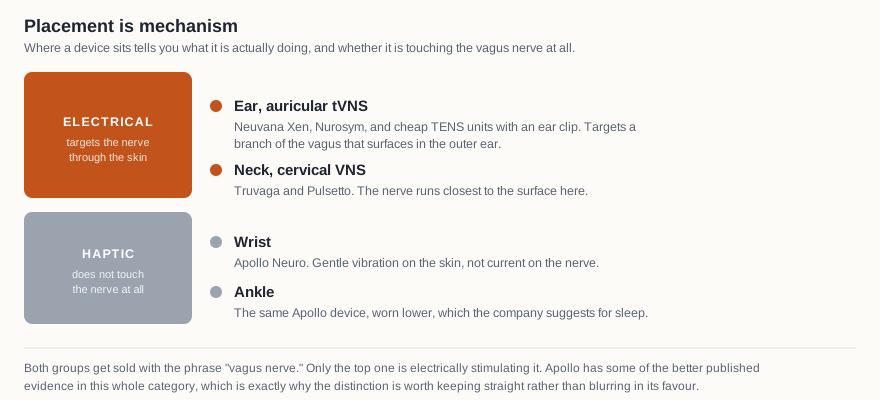
Quick Comparison
| Device | Type | Approx. price | Evidence for stress/sleep |
|---|---|---|---|
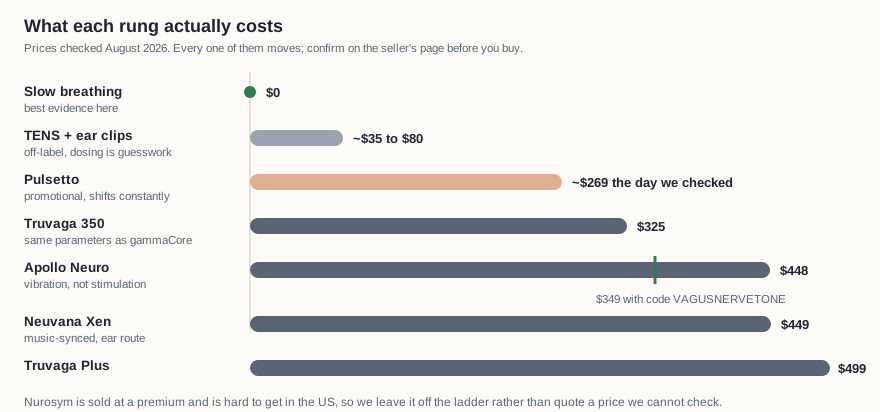
| Truvaga | Neck (nVNS) | $325 to $499 | Best-built, but not cleared for this use |
| Pulsetto | Neck (tVNS) | Promotional | Popular, thin independent proof |
| Neuvana Xen | Ear (tVNS) | ~$449 | Limited, music-synced |
| Nurosym | Ear clip (tVNS) | Premium | Research-positioned, less US access |
| Apollo Neuro | Haptic (not VNS) | $448, or ~$349 with our code | Better research, but it is vibration |
| TENS unit | DIY ear clip | $25 to $70 plus ~$10 clips | Off-label, dosing is guesswork |
How We Rate These
Every device gets an honesty score across three things: what it does (mechanism), what it costs, and how strong the evidence is for the stress and sleep claims. We do not use star ratings or first-person "we tested it for 30 days" claims we cannot back up. Where we have not personally used a device, we say so.
The Devices
Truvaga (Truvaga 350 and Truvaga Plus)
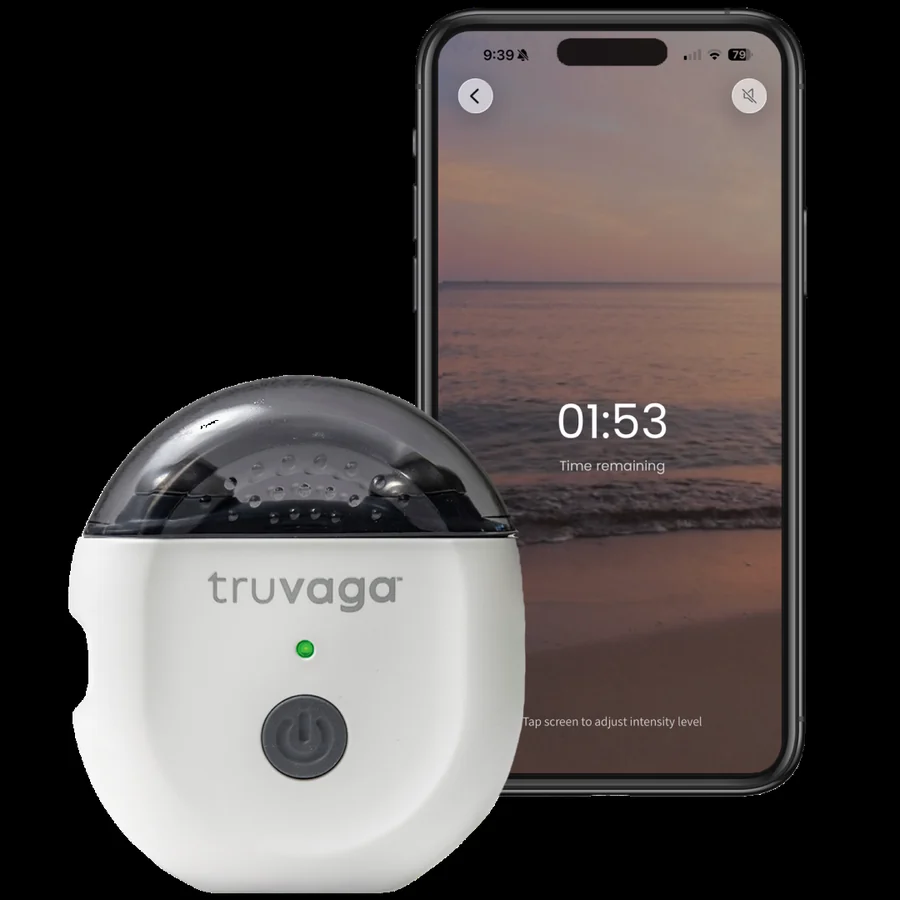
Type: Handheld neck (non-invasive cervical VNS)
Price: Truvaga 350 around $325, Truvaga Plus around $499 (checked August 2026, check current price)
Made by: electroCore, the same company behind prescription gammaCore
Evidence: Uses the same stimulation parameters as gammaCore, which is FDA-cleared for headache. Not cleared for stress or sleep.
Truvaga is the consumer device with the strongest technical pedigree. It delivers the same signal pattern as gammaCore, a prescription device with real clinical trials behind it for headache. The 350 is cheaper, uses gel, and comes preloaded with 350 sessions. The Plus is pricier, rechargeable, uses a spray, offers unlimited sessions, and runs through an app. Both are HSA/FSA eligible. The honest caveat: sharing hardware with a cleared medical device is not the same as being proven for stress relief, which Truvaga is not.
Strengths
- Same parameters as a cleared medical device
- HSA/FSA eligible
- Built to last years of sessions
Weak spots
- Expensive, especially the Plus
- No clearance for stress or sleep
- Plus needs an app and consumables
Pulsetto
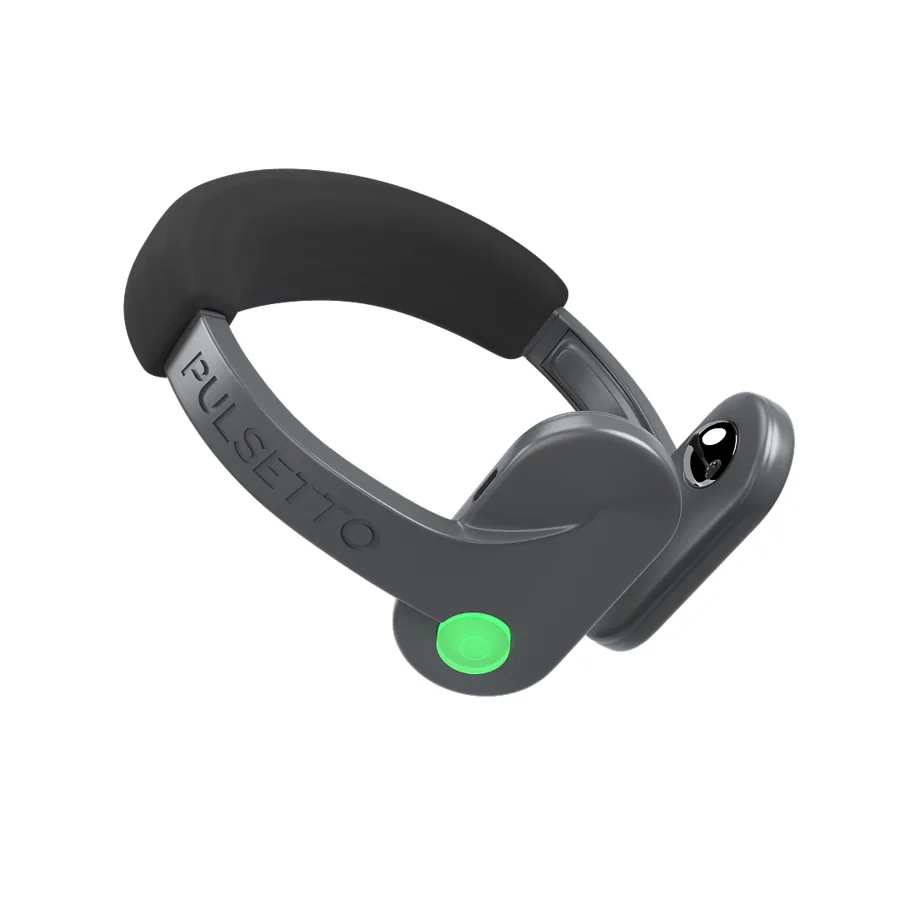
Type: Neck-worn (bilateral cervical tVNS)
Price: Promotional and changes often (check current price). A Pulsetto Lite is also sold on Amazon.
Extras: App with guided programs, 30-day money-back guarantee, two-year warranty
Evidence: Large user base and company-reported satisfaction, but limited independent clinical proof for stress and sleep.
Pulsetto is the device most people have heard of. It wraps around the neck and stimulates both sides, paired with an app of guided sessions for stress, sleep, and focus. The company reports over 100,000 customers and strong satisfaction scores. That is popularity data, not clinical proof. Independent evidence that it outperforms a sham for stress and sleep is thin. It is a reasonable pick if you want a comfortable, app-guided neck device and you go in treating it as an experiment. The generous return window helps lower the risk of trying it.
Strengths
- Comfortable hands-free neck design
- Big user base and guided app
- 30-day money-back and 2-year warranty
Weak spots
- Thin independent evidence for its claims
- Confusing promotional pricing
- App upsells a premium subscription
Neuvana Xen
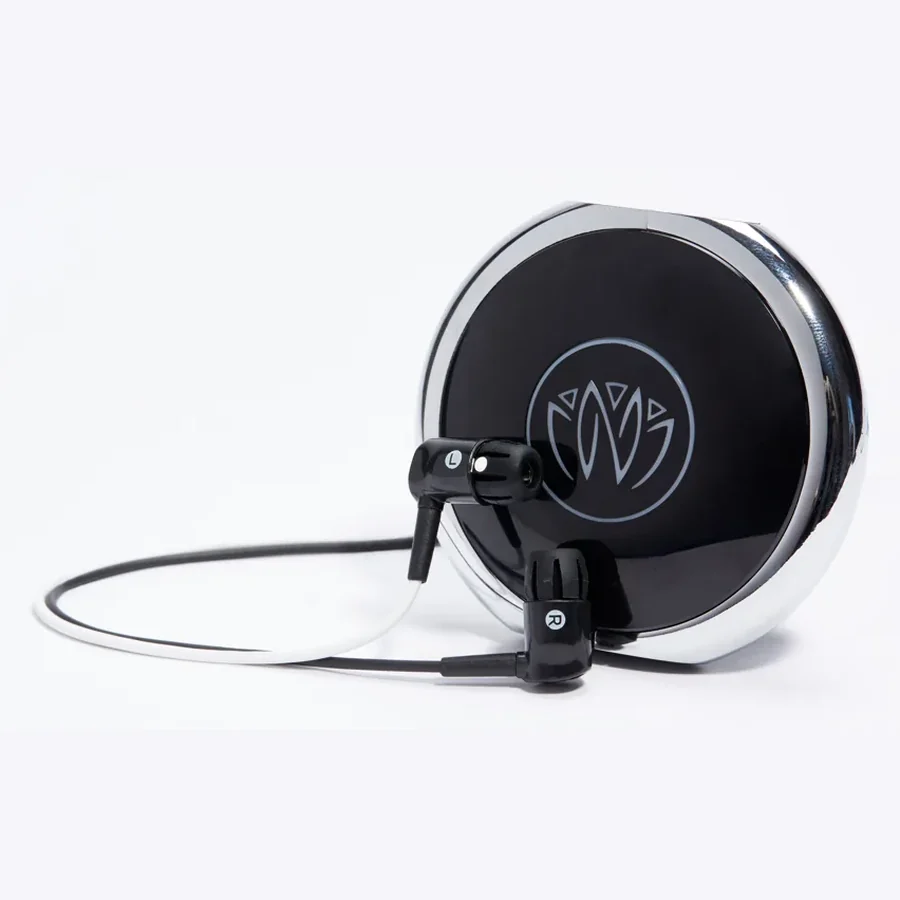
Type: Ear (auricular tVNS through earbuds)
Price: Around $449 (check current price), HSA/FSA eligible
Extras: Pairs stimulation with your music, 30-day return window, no restocking fee (Neuvana dropped it; policy checked August 2026)
Evidence: Auricular tVNS is a real research target, but consumer evidence for Xen's stress and sleep claims is limited.
Neuvana takes the ear route. Its Xen device sends gentle stimulation through special earbuds and syncs it to whatever you are listening to, which is a genuinely different experience from the neck devices. If pairing calm with music appeals to you, this is the standout. Returns used to carry a 10% restocking fee; as of our August 2026 check Neuvana's published policy is a plain 30-day return with no restocking fee, so the old reason to prefer Pulsetto on return risk is gone. You still pay return shipping, or $12.50 if you want their prepaid label. As with the others, "targets the auricular vagus" is a mechanism, not proof of a stress or sleep benefit.
Strengths
- Unique music-synced experience
- Ear form factor some prefer to neck
- HSA/FSA eligible
Weak spots
- You pay return shipping, or $12.50 for their label
- Earbud fit matters and is fiddly for some
- Limited independent evidence for claims
Nurosym
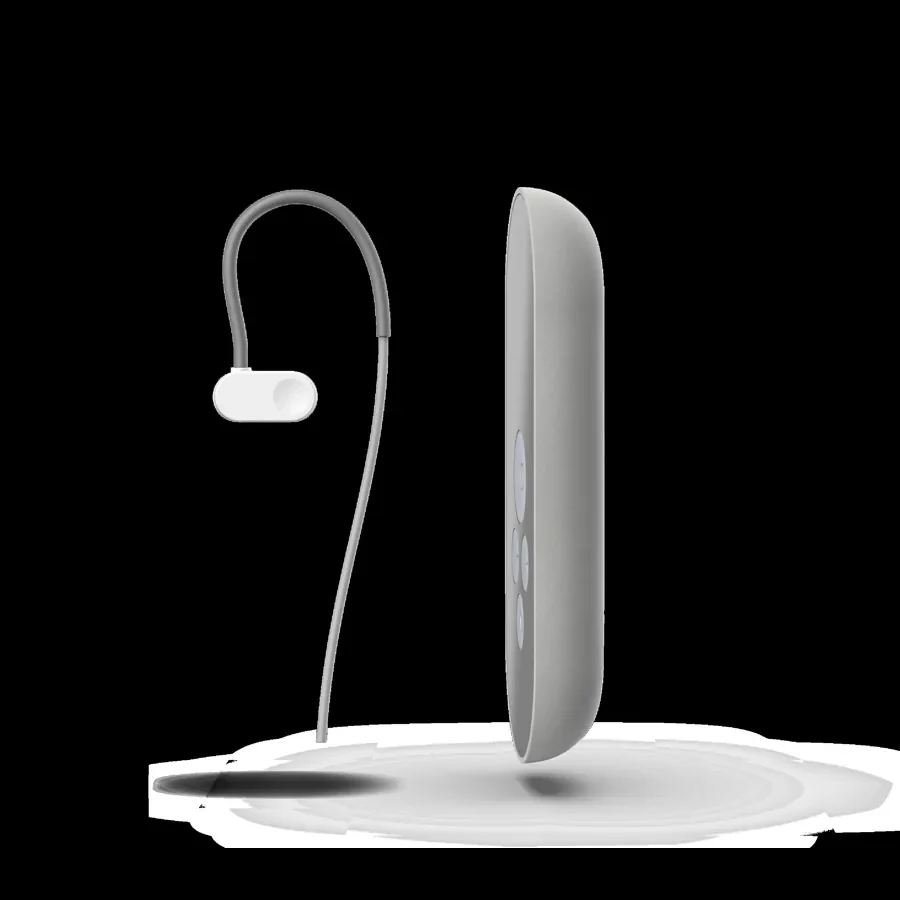
Type: Ear (auricular tVNS via ear clip)
Price: Premium, sold mainly in Europe (check current price)
Evidence: Positioned as a research-grade device and used in some studies, but expensive and less accessible in the US.
Nurosym is the ear-clip device often mentioned alongside the others in enthusiast circles. It leans on a research-grade positioning and appears in some studies. It is pricey and less available in the United States, so most US buyers land on Truvaga, Pulsetto, or Neuvana instead. We have not used it, so we are not ranking it above the others. Confirm current pricing and shipping to your country before considering it.
Apollo Neuro (Read the Asterisk)
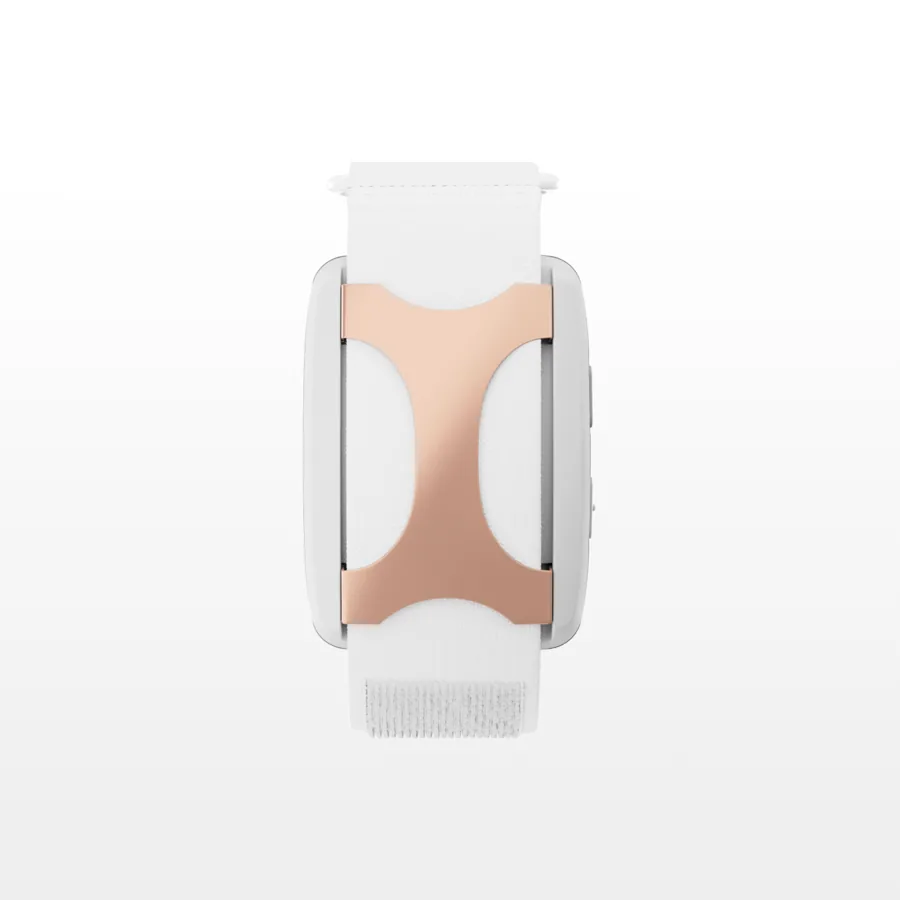
Type: Wrist or ankle wearable using gentle vibration (haptics), NOT electrical vagus stimulation
Price: Apollo lists the bundle at $448 with an annual SmartVibes subscription; our code VAGUSNERVETONE brings it to $349 (checked August 2026, check current price and renewal terms)
Evidence: Some of the better consumer wearable research, including small randomized trials, reports of modest HRV improvement, and a large 2026 real-world sleep dataset (read the asterisk below).
Apollo Neuro constantly gets grouped with vagus stimulators, so it belongs here with a clear correction: it does not stimulate the vagus nerve with electricity. It uses soothing vibration on the skin, which may calm the nervous system through touch. Oddly, it has some of the more credible published research in the wellness-wearable space, including randomized trials and reports of an HRV bump; the company cites 17 clinical trials, a number we have not independently audited. If you want the device with the least-thin evidence and you are fine with a subscription model, this is a fair pick, just do not buy it thinking it is a vagus electrical stimulator.
Apollo published a new one in July 2026, and it is worth naming precisely because of how it is described. It analyzed 474,852 nights of sleep from 935 users who wore Apollo alongside an Oura Ring, and found that among people who habitually slept under six hours, Apollo use tracked with roughly 46 more minutes of sleep per night and a 77% lower chance of a sub-six-hour night, plus more REM. Read the asterisk: this is real-world usage data from Apollo's own customers, run and published by Apollo, not an independent randomized trial, and the manuscript sits on JMIR's preprint server, meaning it has not yet cleared peer review despite Apollo's own write-up calling it "peer-reviewed." Correlation in an opt-in user base can reflect who bothers to wear the device consistently, not just what the device does. None of that makes 474,852 nights worthless as a signal, it is a genuinely large dataset and the dose-response pattern (more use, more benefit) is the kind of detail that is harder to fake than a topline average. It just means "large observational study, self-published, pending peer review" is the accurate label, not "clinical proof."
Practical details worth knowing: it wears on the wrist, the ankle, or clipped to clothing (the company suggests the ankle for sleep), and the SmartVibes subscription layer is the part that automates when and how it runs, calibrating over roughly a week of nights and optionally pulling in Oura Ring data. The honest read on that: the automation is genuinely the product now, so price the subscription renewal into your decision, not just the hardware. Even Apollo's own guidance says effects build over weeks of consistent wear rather than on night one, which we count in its favor as candor and against it as friction. Our reader code VAGUSNERVETONE takes $99 off, which meaningfully changes the math on the priciest wearable in this guide.
Strengths
- Better published evidence than most rivals
- Comfortable, no gel or neck contact
- Wearable day and night, automation runs itself
- $99 off with code VAGUSNERVETONE
Weak spots
- Not actually vagus stimulation, it is vibration
- Annual subscription cost is the real business model
- Effects described as subtle and slow, weeks not days
Apollo also takes HSA and FSA cards through TrueMed, which stacks with the code and brings $448 to roughly $244. Worth two minutes if you had already decided; not a reason to decide. See the HSA and FSA math.
TENS Units (The Cheap DIY Route)
Type: Generic electrical stimulator with ear clips, used off-label for the auricular vagus
Price: Units run roughly $25 to $70 on Amazon, and the ear clips are usually a separate accessory at around $10 (checked August 2026, check current price)
Evidence: Not designed or cleared for vagus stimulation. Some taVNS research uses modified TENS setups, but consumer dosing is guesswork.
The budget route is a basic TENS unit with an ear clip. Some early tVNS research actually used modified TENS devices, so the idea is not absurd. But a generic TENS unit is not designed, calibrated, or cleared for vagus stimulation, the correct placement and dose are guesswork, and every safety caution on our safety page applies in full. If you are experimenting on a budget and you are healthy, it is the cheapest way to test the concept. It is also the easiest way to do it wrong. The full explainer is on the TENS for vagus page.
See TENS units on AmazonOur Honest Recommendation
Start free. Do the breathing protocol for a month and track your HRV. If you still want hardware, Truvaga is the best-built option and Apollo Neuro has the least-thin research, though it is not true vagus stimulation (and our $99-off code VAGUSNERVETONE softens its price problem). Whatever you pick, read the safety page first and treat the device as an experiment, not a treatment. For the full evidence picture, see the evidence page.
See Also
- Pulsetto vs Neuvana, neck versus ear, head to head
- TENS units for vagus stimulation, the budget route and its limits
- Building a full recovery stack? See cold plunging, red light recovery, and circadian lighting.